
HEATING PERCEPTIONS
BY Scott Secor
MANAGING YOUR BUSINESS
Cold calls
As temperatures plunge across the eastern U.S., emergency calls surge.
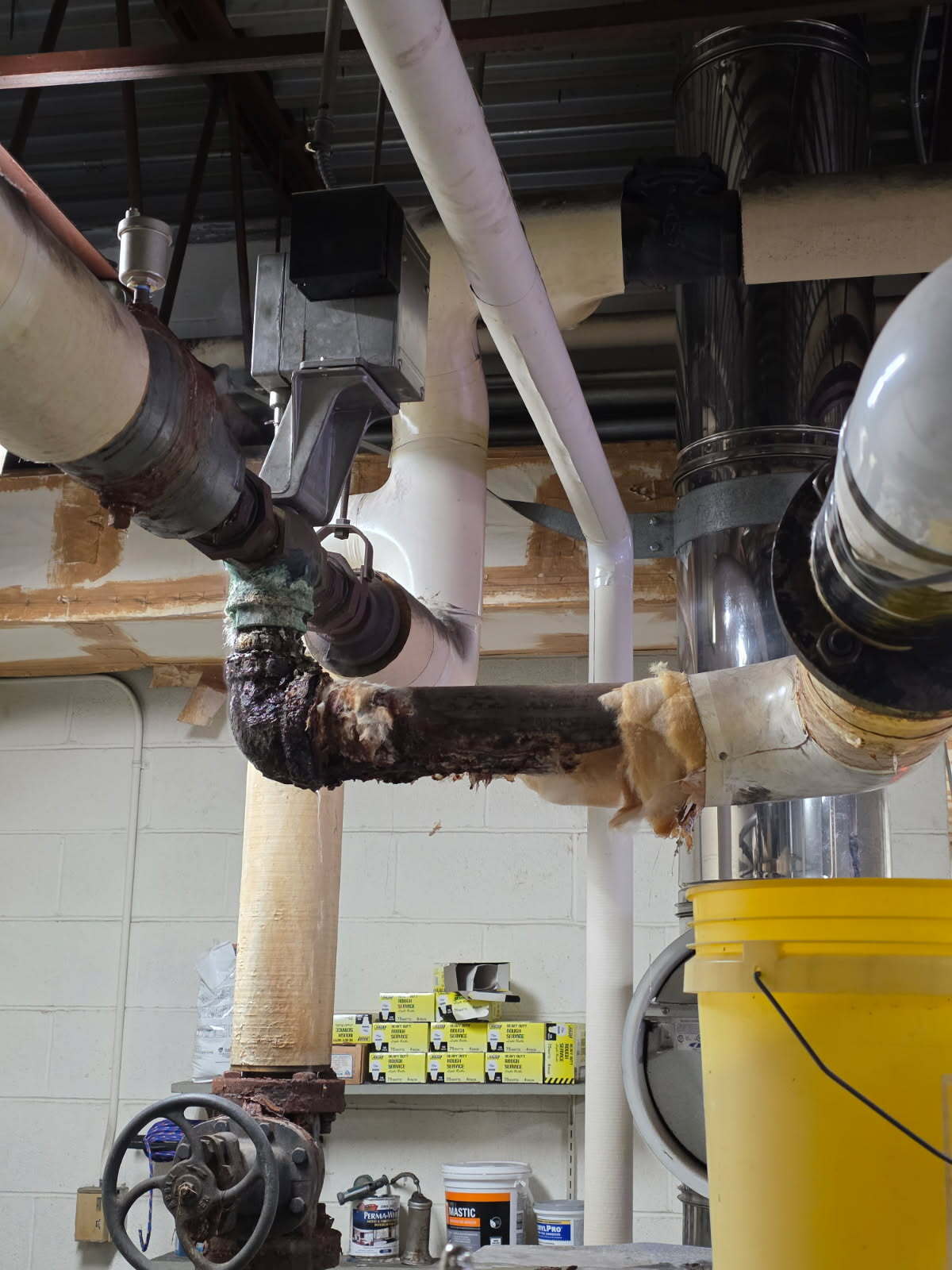
These days, just getting someone to show up on site is a big deal.
As most readers know, much of the eastern section of the Unites States has had colder (and snowier) weather than typical for the last month. From my years of experience in the heating industry, I've noticed that as winter temperatures drop, customer calls increase significantly. This year has certainly been no exception.
At this point in my life, I try not to work on nights and weekends. Due to the high volume of calls, I had no choice. The customers certainly appreciate it, and oddly are not complaining about paying call out fees for nights and weekends. Based on what I read, just getting someone to show up at the site is a big deal these days.
For the last twenty years or so, I have often visited the trickier commercial emergency calls. In the past month I went to every type of customer we take care of. To be honest, fixing a small house boiler was kind of fun.
On Saturday, a few hours before the big storm, we got a call for no heat. This family just returned from a cruise to the Caribbean. They told me the temperature in the house was hovering around forty degrees. The husband assumed it was the circulator pump and replaced himself. Unfortunately, that did not fix the problem. When I got there, I immediately recognized the older Weil McLain CG style boiler was installed before I started in the business. I was able to determine that the original pump relay had failed. I drove to my shop and grabbed one off the shelf (covered in dust) and drove back to the job. When I pulled the old relay, I noticed the date was 1979. Amazing, the relay (boiler, gas, valve, etc.) lasted forty-seven years.
On another job, we got the call that the recently finished basement at a church/school was flooded. When I arrived, I noticed I could see my breath. I glanced at the Nest thermostat in the basement, and it read 44 degrees. The maintenance guy brought me to the area where the four brand new bathrooms were just installed. I put my new head lamp on my head and started to look around. The ceiling and walls were literally dripping wet; the lights were out thanks to a tripped breaker. The drips were forming icicles in the ceiling tiles near the outside walls.

I asked to borrow a ladder, and expected to find a broken pipe above the drop ceiling. The entire ceiling was seriously sagging and the galvanized pan below the coil was filled to the rim with water. Instead, we learned that the leak was coming from the area above us, and pouring through the holes in the cement floor. We climbed the stairs and noticed the plaster walls were also dripping wet from the moisture. When we got to the Narthex (main church entranceway), we noticed the carpet was dripping wet. After further investigation, we learned that both seventy-year original cast iron radiators failed. We gathered there was a meeting on Saturday morning before the snowstorm. Church service was cancelled for Sunday. My guys met me at this job, and we began making the repairs. Little did we realize that all but one of the heating zones was frozen in the building.
We began the process of thawing every zone. Thankfully, the copper radiant ceiling in the Sanctuary was working fine, although some of the plaster covering the ceiling fell on the floor, possibly due to the moisture. We got home around midnight after a very long day.
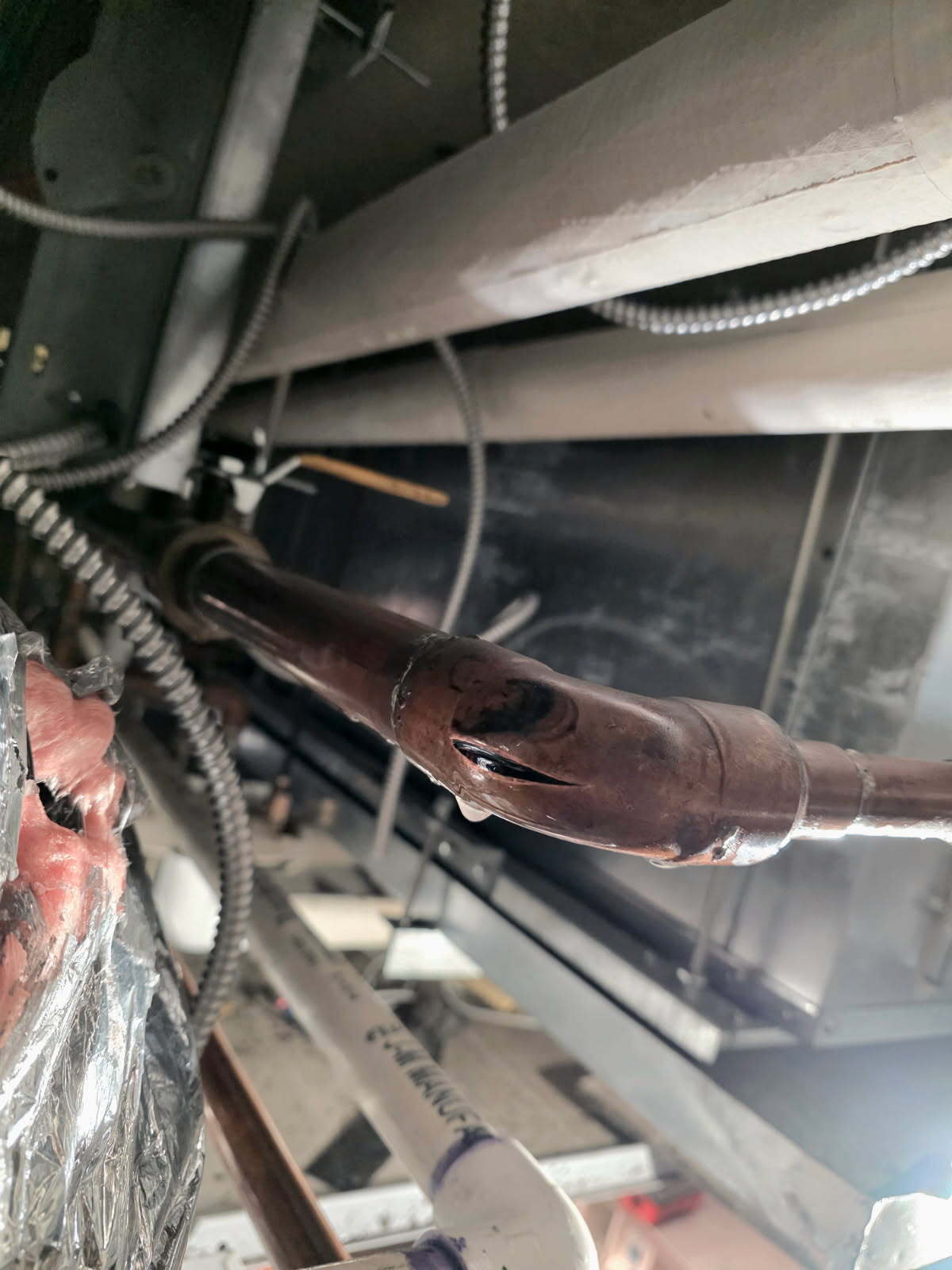
Last Saturday, we got a call for a big leak in the commercial kitchen at one of the local Senior Citizen complexes. We have been working at this site for about thirty years, but I did not know they had this kitchen. This building is approximately twenty years old. When I pulled up to the high-rise building, I met the fireman at the site. A copper elbow split in half after freezing.
This was an easy fix, as the contractor installed valves when they built the building. Unfortunately, when we turned the water back on, we learned that all of the hot and cold-water lines were still frozen inside the exterior walls. There was a total of five sinks, four had frozen pipes.
Last Sunday, I woke up early and had no emergency calls, so I decided to check the ice thickness at the local lake (see below). Just as I got to edge, I received a phone call saying that a local police department had a pipe leak in their boiler room. I headed to the jobsite and met with the head of buildings and grounds. We discovered that the leak was long standing and did not have to be repaired that day. We returned during the week, drained the system and fixed the steel piping leaks. I suppose the staff was more concerned than normal as the outdoor temperatures were so cold.
The ceiling and walls were literally dripping wet; the lights were out thanks to a tripped breaker. The drips were forming icicles in the ceiling tiles near the outside walls.
This time of the year, I pay close attention to the weather and the ice on the waterways. For the first time in many years, the local lake was completely frozen. I spent many winters skating on this lake as a kid. As a teenager, my friends and I would play hockey after school and weekends. When our children were old enough my wife and I taught them to skate.
I returned to the lake after the “emergency call.” I drilled and measured the thickness of the ice at a few locations. The usable length of my auger bit is eight inches; the bit did not get past the ice. That afternoon we played pond hockey for the first time in about ten years. I was joined by our daughter and her husband, our son and his best friend (his wife and mine watched the baby). In between periods, I skated a few hundred yards away, towards a guy that was ice fishing. He mentioned that he really struggled with his hatchet and cold chisels to make his hole in the ice. I asked him how thick it was, he was unsure. I dipped my hockey stick through his fishing hole and found the ice was fourteen inches thick. I do not ever recall the ice being that thick. I guess it really has been colder than normal!
Images courtesy of Scott Secor
Scott Secor runs a small heating business in New Jersey. Founded by his father, Ken Secor, in 1976, Scott began working for the business in the summer of 1986 while attending college. In 2006, he purchased the business and has been running it ever since. The company designs, installs and services steam and hot water heating systems. Contact him at scottsecor@comcast.net.