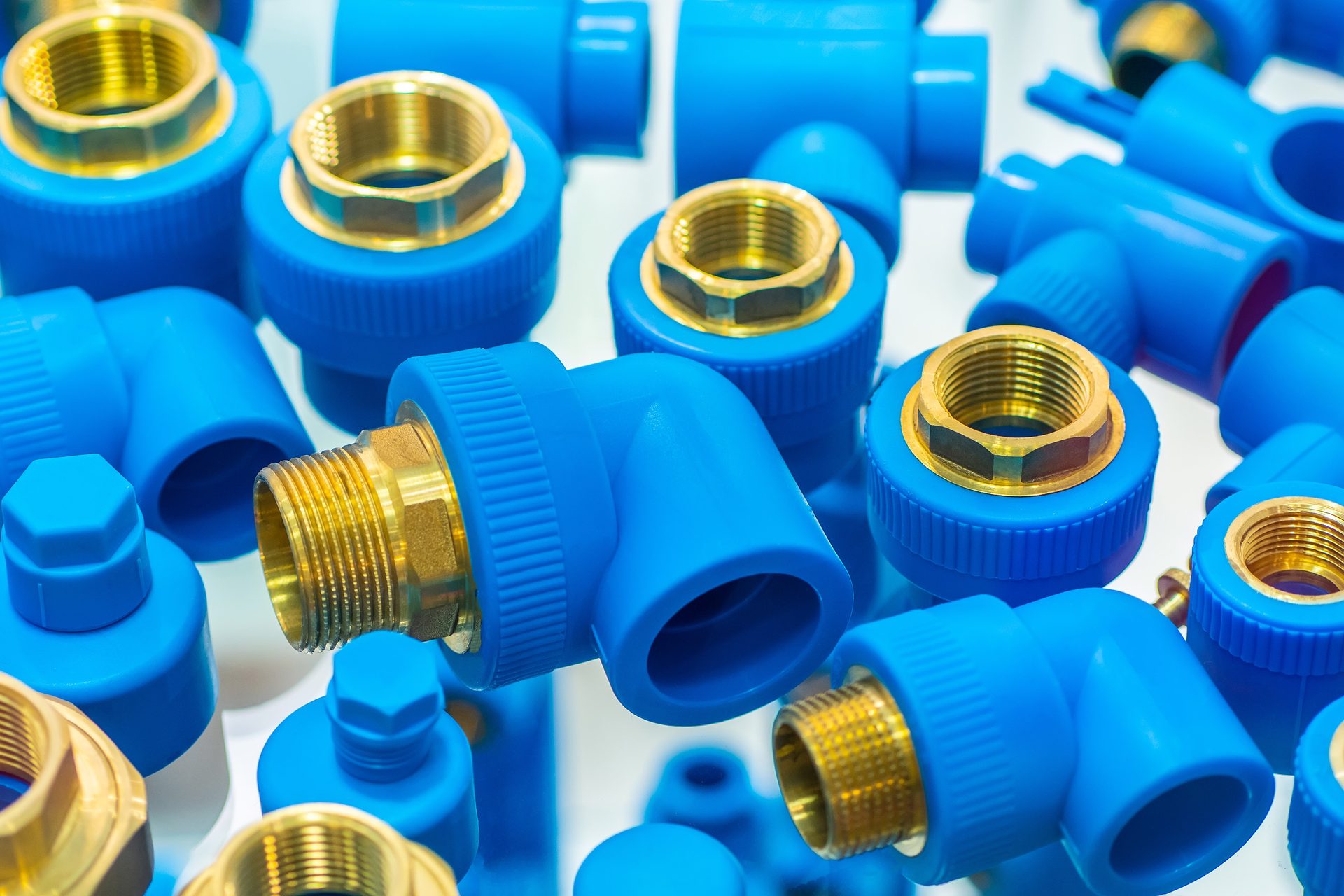
The 2026 AHR Expo will take place February 2-4 at the Las Vegas Convention Center.
Demand for AI, electrification and mission-critical cooling prompts exhibitors to highlight connected technologies that simplify installation and improve long-term performance.
by Natalie Forster
The HVACR industry is entering 2026 at a moment of accelerated change — shaped by the rapid rise of AI-driven technologies, intensifying decarbonization goals, regulatory uncertainty, and mounting pressure on labor and infrastructure. According to Nicole Bush, director of marketing for AHR Expo, these forces are converging to reshape not only the products on display at AHR Expo 2026, but the conversations happening across the show floor.
“We’ve seen explosive growth with AI, smart systems and overall more efficient equipment,” Bush says. “Products are smarter and the technology behind it is making it easier to manage our built environments.” At the same time, she notes, the growth of AI itself is driving new demand for cooling the facilities that power it — particularly data centers — placing hydronics, pumping, controls and system-level efficiency squarely in the spotlight.
Bush expects attendees to see continued momentum around connected systems, heat pumps and equipment that supports decarbonization initiatives, paired with a robust education program addressing refrigerant transitions, policy shifts and emerging technologies. From panels focused on refrigerant policy and installer challenges to sessions exploring AI-enabled buildings and advanced building management systems, AHR Expo 2026 is positioning itself as both a technology showcase and a strategic roadmap for the industry ahead.
Against this backdrop, manufacturers exhibiting at AHR Expo 2026 are bringing forward solutions that prioritize intelligence, flexibility and practicality, addressing real-world challenges faced by contractors, engineers, distributors and building owners. Across interviews with exhibitors, four themes consistently rise to the surface: smarter, connected systems; pragmatic approaches to electrification and decarbonization; labor- and time-saving installation technologies; and the growing influence of data centers and mission-critical facilities.
Intelligence moves from feature to foundation
Across the show floor, intelligence is no longer a value-add, it’s becoming the baseline expectation. From pumps and controls to hybrid heating systems, manufacturers are embedding connectivity, diagnostics and system-level optimization into their products.
For Grundfos, intelligence and efficiency go hand in hand. Pete Korzeniewski, senior sustainability, strategy and commercial manager for Grundfos CBS, says the company will showcase its broadest range of high-efficiency, intelligent pumping solutions to date, including MAGNA3 and TPE3 smart pumps, modular systems and data center cooling technologies.
“The pain point we’re solving is simple but critical: energy waste and complexity,” Korzeniewski explains. “Building owners and operators struggle with high operating costs, inefficient systems and time-consuming commissioning.”
Controls manufacturers are reinforcing that intelligence must extend beyond individual components to the system as a whole. Climate Control Group is highlighting ClimaLink Edge and ClimaLink Cloud, designed to eliminate fragmented HVAC integration. Amanda Diaz, director of engineering – controls, said these platforms create a clear path to AI-driven optimization without the cost and complexity of traditional building automation systems.
“New efficiency standards and decarbonization goals are pushing the industry beyond individual equipment performance toward system-level intelligence,” Diaz says. “Intelligent controls and data visibility are becoming essential tools to maintain compliance, reduce energy waste and support long-term carbon reduction strategies.”
At Xylem Bell & Gossett, intelligent system design continues to be a core focus. Kevin Calzada, senior director of product management for the Americas commercial buildings division, pointed to the hydrovar X-enabled smart pump line as a key innovation on display.

“This technology gives operators actionable insight into system behavior, enabling quick adjustments and more resilient, efficient operation even as building demands shift,” Calzada says. Enhanced connectivity and real-time monitoring, he added, are critical as buildings face increasingly unpredictable loads.
Practical paths to electrification
While electrification remains a dominant theme, exhibitors emphasize that the path forward must be flexible, especially in regions with cold climates, aging infrastructure or cost-sensitive customers.
Weil-McLain is showcasing its ECO Hybrid System, a dual-fuel hydronic solution that pairs an air-to-water heat pump with a high-efficiency boiler. Patrick Villaume, senior manager of commercial applications engineering and technical services, described the system as a pragmatic approach to decarbonization.
“The ECO Hybrid lets the heat pump carry 70–80% of the seasonal heating load, while the boiler provides dependable high-temperature output during peak conditions,” Villaume says. “This ensures efficiency, carbon reduction and comfort without sacrificing performance.”
Similarly, Navien is emphasizing hybrid and dual-fuel solutions for both space heating and domestic hot water. David Hoskyn, product management director, notes that while electrification continues to grow, not every contractor or consumer is ready for all-electric systems.
“Solutions are needed that provide the comfort end users expect while increasing acceptance of heat pumps or electric products in the market,” Hoskyn says. “Navien’s focus on optimized controls and system performance reflects the need for choice as regulations and utility policies continue to evolve.”
ADVERTISEMENT
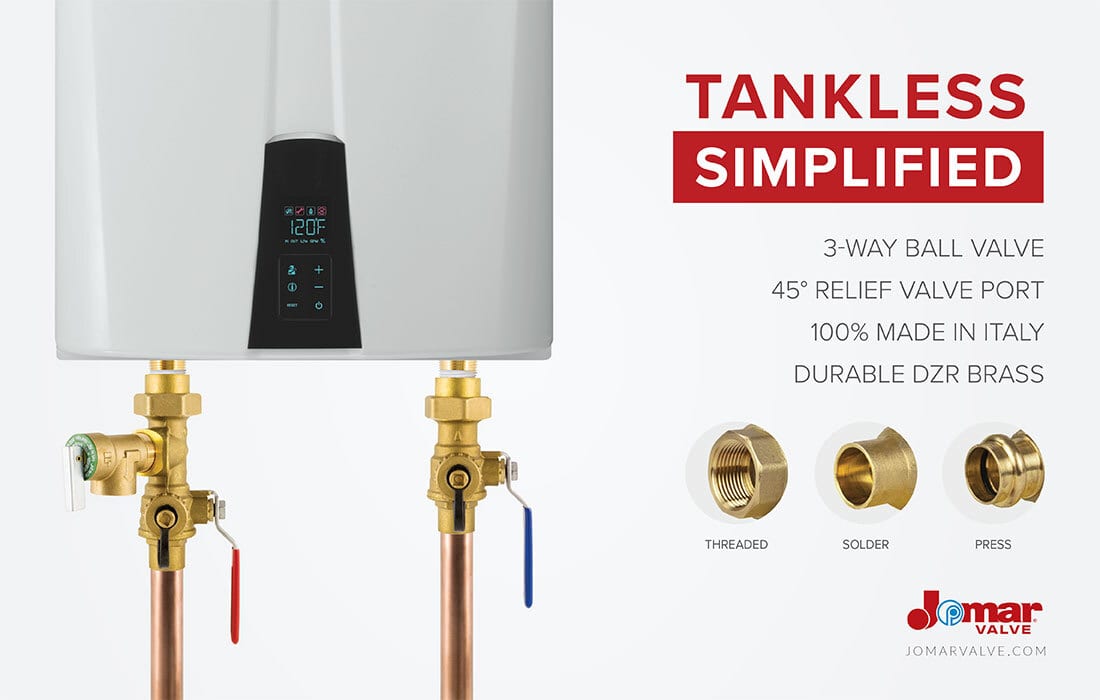
From a system-infrastructure perspective, Aalberts is reinforcing that electrification and decarbonization must be supported by reliable, adaptable components. Jaimie Kenney, VP of marketing at Aalberts IPS, says regulatory shifts are validating long-standing engineering priorities rather than forcing reactive redesigns.
“Our valves, connection technologies and press systems are engineered to meet the pressures, temperatures and performance expectations associated with newer standards,” Kenney says. “Rather than reacting to regulation, our innovations reflect reliability, safety and longevity.”
Labor-saving installation remains top priority
With workforce shortages continuing to challenge the industry, manufacturers are placing renewed emphasis on products that simplify installation, reduce skilled labor demands and accelerate project timelines.
NIBCO is spotlighting its PressACR press-to-connect system engineered for HVACR applications. Marilyn Morgan, senior product manager, says the system addresses a critical need for safer, faster joinery — particularly in environments where hot work presents risks and delays.
“PressACR dramatically streamlines installation by eliminating flames, reducing labor time and enhancing consistency of joint quality,” Morgan says. The system’s versatility allows contractors to use a single joining solution across residential and commercial projects.
Prefabrication is also gaining traction as a way to combat inefficiencies. GF Building Flow Solutions Americas is showcasing Uponor Prefabricated PEX Risers, which combine design assistance with factory-built components delivered just in time.
“With labor inefficiencies and rework being two of the biggest issues affecting the industry, prefabricated risers reduce field connections up to 75%,” says Anna Picchetti, VP of marketing and strategy. The approach improves installation consistency while minimizing jobsite waste.
At the system level, modularity continues to play a key role. Grundfos, Aalberts and Xylem all highlighted modular pump systems and scalable designs that allow contractors to build, expand and service systems more efficiently — a trend expected to be highly visible across the AHR show floor.
Data Centers and Mission-Critical Facilities Drive Demand
Perhaps no segment better illustrates the convergence of intelligence, efficiency and reliability than data centers. As AI adoption accelerates, cooling infrastructure has become a mission-critical priority.
Korzeniewski of Grundfos described data centers as the company’s fastest-growing market. “Cooling demands are skyrocketing, and operators need solutions that improve efficiency and uptime,” he said. Distributed pumping systems and intelligent controls are designed to deliver better performance while simplifying commissioning.
Aalberts is also seeing strong growth in data centers and industrial facilities. Kenney noted that customers rely on engineered, made-to-order solutions supported by design assistance and rapid-response manufacturing.
For Xylem Bell & Gossett, data centers represent a clear example of why adaptability matters. “These facilities are at the heart of the new economy,” Calzada said. “That makes system efficiency and reliability more critical than ever.”
From smart pumps and AI-ready controls to hybrid heating systems and prefabricated infrastructure, AHR Expo 2026 reflects an industry focused on practical innovation. As Bush noted, AHR’s role is not only to highlight what’s new, but to create space for meaningful dialogue across the value chain.
With education sessions, exhibitor demonstrations and peer-to-peer conversations addressing real-world challenges, AHR Expo 2026 promises to deliver more than a snapshot of emerging technologies — it offers a window into how the HVACR industry is adapting, evolving and building smarter for the future.
AHR 2026 Product preview
Intelligent Pump Control
At AHR 2026, Grundfos is launching the new Intelligent Pump Control GENIECON. The next-generation control unit is designed for energy-efficient, future-proof operations. GENIECON seamlessly manages parallel-connected pumps, optimizing water supply and energy usage for commercial buildings in several HVAC and Plumbing applications. With advanced real-time analytics, an intuitive interface, and smart connectivity, GENIECON maximizes efficiency, reduces energy consumption, and supports your net-zero goals. Experience reliable performance, remote monitoring, and effortless integration with digital systems for complete control and peace of mind.
GRUNDFOS – Booth C6516
Prefabricated PEX Risers
As part of the new Uponor Prefabrication Services offering, GF Building Flow Solutions is launching Uponor Prefabricated PEX Risers for domestic water and hydronic distribution piping systems. With labor inefficiencies and rework being two of the biggest issues affecting the industry, offsite construction continues to be the best solution. Combining comprehensive design assistance, expertly fabricated assemblies, and just-in-time shipments to meet construction schedules, Uponor Prefabricated PEX Risers are the smart solution to keep projects on budget and on track.
Uponor – Booth C7925
PressACR Line Extension for HVACR Applications
Designed to meet the growing demand for larger diameter press connections in the air conditioning and refrigeration industry, NIBCO has added new 2 1/8" OD fittings to its PressACR® line. Manufactured in Stuarts Draft, Va., of high-quality, globally sourced pure copper, NIBCO’s PressACR press end connections reduce installation time while the patented interior groove design and gray HNBR seals make them suitable for high-pressure HVACR applications. The fittings currently range in sizes from 1/4-inch up to 2-1/8-inch.
NIBCO – Booth C5335
ClimaLink Edge
ClimaLink Edge is a next-generation HVAC integration control that connects water-source heat pumps and mechanical systems to modern building automation and cloud platforms. Supporting BACnet/IP, BACnet MS/TP, and Modbus, it enables real-time data exchange, advanced diagnostics, and AI-ready optimization. Designed for both new construction and retrofits, ClimaLink Edge helps buildings operate smarter, more efficiently, and with a clear path toward decarbonization.
Climate Control Group – Booth C4945
e-90ECM In-Line Pump
The e-90ECM pump maintains the performance of Bell & Gossett’s trusted e-90 line while adding the benefits of ECM technology, including optimized motor speed, reduced energy costs and quieter operation. This versatile in-line pump offers wide hydraulic coverage well suited for the small commercial HVAC market. Appropriate for both new installations and retrofits, the e-90ECM is designed to be mounted in the piping and can be installed either horizontally or vertically to fit even the tightest spaces. The close-coupled design eliminates the need for a bearing frame and coupler, further reducing footprint and simplifying installation. The pump is equipped with an IE5 permanent magnet EC motor, delivering up to 85% efficiency, drastically cutting energy use and operating costs. The pump also features a new controller design with built-in VFD, allowing for local control via onboard controls or remote via a control signal.
Xylem – Booth C2502
PowerPress
Aalberts IPS announces the launch of "Apollo" PowerPress® options in large diameter (LD), an extension of its renowned "Apollo"® PowerPress® product line. This new offering, available in large diameters of 2 1/2", 3", and 4", represents a significant advancement in piping technology, catering to broader applications and offering enhanced flexibility for large-scale projects.
Apollo – Booth SL1364
Hybrid Hydronic System
The ECO™ Hybrid Dual-Fuel Hydronic System combines an air-to-water heat pump and high-efficiency boiler into one integrated residential heating solution. It automatically adjusts operation based on outdoor conditions to optimize efficiency, comfort and reliability, especially in colder climates. Designed for radiant heating and domestic hot water, it supports both retrofit and new installations while helping reduce energy costs and carbon emissions.
Weil-McLain – Booth C3320
Images courtesy of AHR Expo
Natalie Forster is editorial director of BNP Media's Plumbing & Mechanical Group which includes Supply House Times & Plumbing & Mechanical. Reach her at forstern@bnpmedia.com or 224-201-2225.